 Change currency
 GBP
GBP  USD
USD 
Fast Delivery from the UK
30-day money back guarantee
Are you a Teacher? Get Discounts!
Fast Delivery from the UK
30-day money back guarantee
Are you a Teacher? Get Discounts!
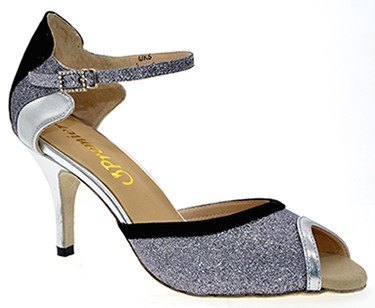
Choosing a pair of dance shoes that is right for you and your preferred style(s) of dancing is vital to assure comfort, avoid injury and maximise your enjoyment, to say nothing of how stylish you look on the dancefloor!
Here are a few important questions to consider when choosing your dance shoes:-
Can I wear street shoes or trainers?
Street shoes or trainers do not offer the support or flexibility required for dancing and their soles will not perform in the same way as those of dance shoes, almost certainly risking injury. They can also damagethe dance floor.
What are the best soles for Latin and ballroom dance shoes?
Suede is universally recognised as the best type of sole for Latin and ballroom dancing.
Suede soles provide the ultimate traction required to pivot & spin without injury to your joints. They allow your feet to glide & prevent you from slipping. Whether you dance salsa, jive or quickstep, suede soles are the perfect choice. They also protect the dance floor from damage, marks & scratches.
This is why all RoTate dance shoes come with suede soles - they are the professionals' choice for a reason and will allow you to get the most pleasure from your dancing as well as miniimising the risk of injury.
It is important to keep your soles clean & dry to keep them performing as they should: Use a suede brush to keep them dirt free.
Why does a dance shoe sole need to be flexible?
A soft, flexible sole allows you to point & flex your feet, giving your dancing a nicer line. A rigid sole will not protect your ankles & knees from injury & will damage the dance floor.
What's wrong with rubber soles?
Rubber soles are designed to grip & stop you from slipping, so they’re not ideal for Latin or ballroom dancing where you need to pivot & slide. Rubber soles can cause strain on your ankles & knees which can lead to injury.
Can I have leather soles?
Leather soles are hard wearing but rigid. They don’t offer the flexibility needed for dancing and will put strain on your ankles over time, potentially causing injury.
What are the best heels for dance shoes?
The heels you choose will be personal preference & depend on the type of dance you perform. There is a variety of heights & shapes - flared, Cuban and slim are popular for ladies' shoes.
Cuban heels are lower (1.2” to 2”) and provide more comfort and support for heel-led dances and for dances where the weight is kept in the heel . Consider styles like Georgia, Rita or Maisy.
Flared heels (2.25” to 3”) give a broader heel surface, which provides more support for dances like Cha Cha Cha and Salsa, whilst still looking elegant. Consider styles like Rachel, Teresa or Leane.
Slim or stiletto heels look very elegant but are higher (2.5” to 3”). They are perfect for dances like the Tango if you are used to wearing heels and you feel stable. Consider styles like Veronica or Trixi.
Men's shoes come with a 1” ballroom heel, great for the Waltz, Foxtrot and similar dances. Consider styles like New York or San Diego.
Men's 1.5” Cuban heels are more suited to Latin dances like Cha Cha Cha and Salsa. Consider styles like Paris or Seville.
Should I have open or closed toe dance shoes?
This is a common question from female dancers. Either are suitable for Latin or ballroom but open toe styles are more popular for Latin dance as they provide more flexibility & better airflow for your feet, keeping your feet cooler and more comfortable. Consider styles like Carlie, Amy or Alex.
Closed toe dance shoes are often preferred for ballroom dances and provide a little more protection for your toes.Consider styles like Alison, Tamara or Chris.
What straps should my dance shoes have?
Again, the choice of strap is very much down to personal preference. T-bars & cross straps like Fiona or Tania keep your shoes firmly attached to your feet, whilst some people prefer the no-fuss option of the simple bar strap like Daisy or Roxanne.
Why should I choose dance shoes with quick change buckles?
As its name suggests, the quick change buckle fastening allows you to change your shoes quickly without the faff of traditional buckles.
Once you have selected the correct length of strap, the strap simply slots into the little hook and pulls tightly against it, keeping your shoes firmly in place.
Other types of fastening can be very fiddly; threading straps through buckles is time consuming and can wear & fray the straps. Press studs are generally not strong enough and can come unfastened, which can cause accident & injury.
All RoTate ladies' shoes come with quick change buckles
How should my dance shoes fit?
Men's & ladies' dance shoes should be snug without being uncomfortable. This prevents the foot from slipping & sliding in the shoe which will prevent materials from stretching over time and ensuring that your dance shoes wear better and last longer.
What materials should I look for?
Dance shoe uppers were traditionally satin for ladies shoes, this is because satin is soft and very closely woven, helping to prevent stretching over time.
Leather dance shoes can be more hard wearing and easier to clean but might be a little less flexible. If you choose leather, make sure it is soft and supple .
RoTate dance shoes are manufactured from the highest quality materials. They are designed for flexibility & longevity, delivering the ultimate in performance and value for money.
Men - it’s important for your shoes to be stylish and comfortable but also designed for performance on the dance floor .
Ladies - you will only wear these shoes on the dance floor, so if you like a bit of glitz and sparkle, go for it!